
Invited Speaker
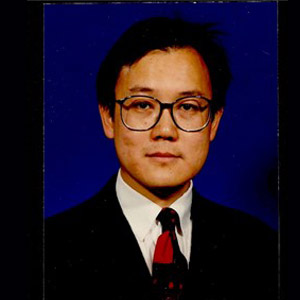
Assoc. Prof. Alvin Y. Liu
Department of Urology & Institute for Stem Cell and Regenerative Medicine, University of Washington, USASpeech Title: Absent Proper Cell-to-cell Signaling as the Driver of Prostate Cancer Development and Disease Progression
Abstract: Functional differentiation of our body cell types depends on instruction transmitted via intercellular signaling. In prostate, the CD49a+CD90lo stromal smooth muscle cells (NPstrom) induce stem cells to differentiate by secreted hormones including proenkephalin (PENK). In cancer, PENK is absent in the CD90hi cancer-associated stromal cells (CPstrom). Without PENK, developing epithelial cells may differentiate into cells with overexpression of the adenocarcinoma antigen anterior gradient 2 (AGR2), a metastasis promoter. Cancer-secreted AGR2 also depletes NPstrom by inducing programmed cell death. Over the disease course, cancer cell differentiation is lost with emergence of more stem-like small cell carcinoma cells characterized by the expression of stem cell transcription factors (scTF) LIN28A, NANOG, POU5F1, SOX2, and decreased expression of β2-microglobulin (B2M) – phenotyped as scTF+B2Mlo. Experimentally, scTF transfection can convert scTF-B2Mhi adenocarcinoma cells into scTF+B2Mlo stem-like. PENK functions to inactivate scTF in stem cells as well as stem-like cancer cells to exit from the stem state and undergo differentiation with down-regulation of scTF and up-regulation of B2M. PENK, together with another hormone stanniocalcin 1 (STC1), can change cancer cells into ones that form gland-like structures containing a central lumen with apparent tight junctions between neighboring cells. Thus, the loss of cancer differentiation could be attributed to activation of scTF as in reprogramming, which could be reversed by PENK and STC1. Cancer cells, having multiple genomic alterations and being aneuploid, can still respond to these identified organ-specific signaling hormones. By gene expression, the PENK-negative CPstrom represents an underdeveloped PENK-positive NPstrom with lower expression of smooth muscle cell genes and genes associated with less differentiated cells. The bladder equivalent of NPstrom, CD13+ stromal cells in the lamina propria, also induce differentiation of stem cells from scTF+B2Mlo to scTF-B2Mhi but with expression of bladder instead of prostate genes demonstrating plasticity in stem cell response to different differentiation instructions.
Biography: Dr. Liu received his doctoral degree in molecular biology (under Dr. Winston Salser) from the University of California, Los Angeles and post-doctoral training in molecular parasitology (sleeping sickness trypanosomiasis, under Dr. Piet Borst) at the University of Amsterdam and the Netherlands Cancer Institute. After research in the field of cancer treatment with generated chimeric antibodies in Biotech, he joined the faculty in the Department of Urology, and later in the Institute of Stem Cell and Regenerative Medicine at the University of Washington, Seattle. His primary research concerns prostate and bladder cancer in intercellular interaction, loss of cancer differentiation, biomarkers and early detection, and treatment strategy development. His contributions to the field are reviewed: 1. Methodology in gene expression analysis and cellular differentiation: Prostate cancer research: tools, cell types, and molecular targets (2024). 2. Identification of signaling molecules and their effect on differentiation: Cell-to-cell communication in prostate differentiation and cancer (2024). 3. Tissue regeneration: How to rejuvenate the prostate damaged by cancer (2025). 4. Emergence of stem-like cancer cells: The cancer stem cell concept as applied to prostate cancer (2026). 5. The non-mutation centric hypothesis of cancer: Absent proper cell-to-cell signaling as the driver of prostate cancer development and disease progression (2026).