
Invited Speaker
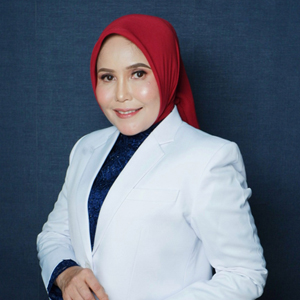
Prof. Dr. Dessy R. Emril
Departement of Neurology, Faculty of Medicine, Syiah Kuala University/Regional General Hospital of Dr. Zainoel Abidin, IndonesiaSpeech Title: Head-to-Head Comparison of Cell-Based and Cell-Free Therapies on Structural and Functional Recovery Following Sciatic Nerve Crush Injury
Abstract: Background: Peripheral nerve injury frequently results in incomplete axonal regeneration and persistent functional deficits. Regenerative therapies including human umbilical cord–derived mesenchymal stem cells (hUC-MSCs), mechanically or enzymatically prepared adipose stromal vascular fraction (mSVF, eSVF), and secretome-based approaches show neurotrophic and angiogenic potential, yet direct comparative evidence remains limited.
Objective: To compare cell-based and cell-free regenerative therapies on macroscopic structure, motor recovery, and neuropathic pain behavior after sciatic nerve crush injury in rats.
Methods: This true experimental post-test only study used seventy male Wistar rats randomized into seven groups: control, saline, hUC-MSC, mSVF, eSVF, secretome, and secretome plus. A standardized sciatic nerve crush injury was induced, followed by local administration of assigned treatments. Outcomes included macroscopic nerve diameter, color, and vascularization; motor function assessed by Extensor Postural Thrust (EPT); and sensory behavior assessed by the Acetone Evaporation Test (AET). Analyses used one-way ANOVA and ordinal logistic regression.
Results: Axonal color and vascularization were uniform across groups. Nerve diameter differed significantly (p < 0.001), with the smallest diameter in controls (0.57 ± 0.07 mm) and the largest in saline (1.28 ± 0.08 mm); mSVF and eSVF also showed increased diameters, suggesting persistent local inflammation. EPT scores did not differ among groups (p = 0.579). Ordinal logistic regression demonstrated significantly reduced acetone responses in most treatment groups versus the reference group, indicating improved sensory outcomes.
Conclusion: Cell-based and cell-free therapies primarily improved sensory modulation after sciatic nerve injury, while motor recovery was comparable across groups. Structural differences in nerve diameter suggest ongoing inflammation.
Keywords: Peripheral nerve injury; Mesenchymal stem cells; Stromal vascular fraction; Secretome.
Biography: Prof. Dr. Dessy R. Emril is an Indonesian neurologist, professor, clinician, and researcher specializing in pain medicine and neuropathic pain. She is affiliated with the Faculty of Medicine, Universitas Syiah Kuala, Indonesia, where she is actively involved in medical education, clinical practice, and research.
Her research focuses on neuropathic pain mechanisms, innovative therapeutic approaches, including regenerative strategies for chronic pain management. Prof. Emril has been invited to speak at numerous national and international scientific meetings, contributing to the advancement of neurological care and pain management.
She currently serves as the Chair of the National Pain Working Group of PERDOSNI (Indonesian Neurological Association). In recognition of her contributions to medical innovation, she has received several honors, including the Annual Innovation Award, Dokter Teladan Nasional – Innovation Category, and the Excellent Pain Management Award. In 2026, she was also selected for inclusion in Britishpedia’s Successful People in Indonesia.