
Invited Speaker
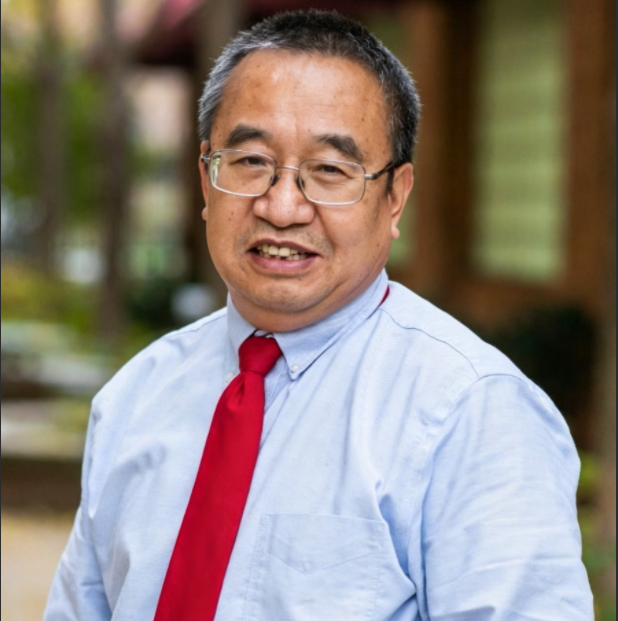
Prof. Zhude Tu
Professor of RadiologyDirector of Precision Radiotheranostics Translation Center (PRTC)
Division of Radiological Sciences
Mallinckrodt Institute of Radiology
Washington University School of Medicine, USA
Speech Title: Development and validation of S1PR2 PET radiotracers for imaging myocardial ischemia reperfusion injury in a rodent model
Abstract: Myocardial infarction (MI) is the leading cause of cardiovascular diseases. Reperfusion therapies are used to restore blood flow and oxygen in MI patients. However, myocardia ischemia reperfusion injury (MIRI) can further exacerbate myocardial damage. Sphingosine-1-phosphate receptor 2 (S1PR2) signalling has been implicated in cardiovascular pathology, particularly in MIRI. Positron emission tomography (PET) imaging with a novel S1PR2 radiotracer can advance our understanding of the role of S1PR2 in MIRI. However, no suitable S1PR2 radiotracer is currently available to study MIRI in vivo. Herein, we report our efforts on the design, synthesis, and evaluation of a series of novel S1PR2 compounds. Five potent and selective compounds 15a-e with IC50 values ranging from 10-120 nM were selected for F-18 radiolabelling to make radiotracers [18F]15a-e. Our PET imaging study in a mouse model of MIRI showed that all five radiotracers exhibited increased uptake in the infarct and peri-infarct regions of the heart in MIRI mice compared to control mice, consistent with the findings from autoradiography and immunostaining analysis of corresponding heart tissue sections. Our data showed that [18F]15b is a high potent (IC50 = 5.0 ± 4.24 nM) and selective S1PR2 radiotracer and had the highest uptake and the greatest signal-to-noise ratio in MIRI mice post-injury compared to other radiotracers. No radiometabolite was observed in mouse heart tissue at 60 min post injection of [18F]15b. Together, [18F]15b is a promising radiotracer with high sensitivity for imaging MIRI and it worths to further translational investigation of its implementation in MIRI patients.
Keywords: PET imaging, myocardial ischemia-reperfusion injury (MIRI), S1PR2, radiotracer
Biography: Dr. Zhude Tu is a professor of radiology in Washington University School of Medicine (WUSM) in St. Louis. He has served as the Director, Precision Radiotheranostics Translation Center (PRTC) in Mallinckrodt Institute of Radiology (MIR), WUSM since 2019. Dr. Tu received his Ph.D. in 1995 from Beijing Normal University, China. He accomplished his postdoctoral training from the University of Minnesota, Minneapolis in 2000. He started his faculty career in WUSM in 2002. His research activity majorly focuses on development and validation of PET radiopharmaceuticals and transferring promise candidates into clinical investigation for human, and implementation for patients with different diseases. His team’s efforts focus on neuroimaging and also involve cardiovascular imaging and cancer imaging. His team has made contributions to 14 PET radiopharmaceuticals e-IND applications for clinical investigations for different diseases in MIR PET program. Due to his outstanding contribution, Dr. Tu received Distinguished Investigator Award of Academy from Radiological Society of North America in 2018, he was named 2026 senior members of the National Academy of Inentors (NAI) in USA. Besides his outstanding scientific contributions, Dr. Tu is an excellent mentor. Postdocs, junior scientists and visiting scholars who had received training from his team, are successful faculty members in different prestigious research institutes, or key investigators in medical health industry corporations.